7 Hollow Conjugate Buying Tips for Global Buyers
Global sourcing is moving toward tighter specifications, clearer traceability, and faster supplier decisions. Hollow Conjugate products sit inside this demanding environment. They may look similar in samples, yet differ in fiber fineness, crimp, resilience, moisture behavior, and filling performance.
The scale is significant. Textile Exchange’s Materials Market Report 2024 estimated global fiber production at about 124 million tonnes in 2023, with polyester representing roughly 57% of total output. That volume creates opportunity, but also pressure on recycled content, origin claims, and consistent quality. ITMF’s Global Textile Industry Survey has repeatedly identified weak demand, cost pressure, and supply-chain uncertainty as major industry concerns. Buyers therefore need more than a low quotation.
A practical purchasing review should examine seven areas, including technical specifications, supplier capability, testing, documentation, logistics, sustainability evidence, and total landed cost. Ask for measurable details. For example, compare fiber length, denier, hollow percentage, silicon treatment, bale weight, and lot-to-lot variation. Request test methods and recent laboratory results, rather than accepting “premium quality” as proof.
Standards matter.
ISO 2076 can support fiber identification, while relevant ASTM or ISO methods may help verify mass, moisture, and physical performance. Compliance expectations also vary by destination, so buyers should confirm applicable chemical and product requirements before shipment. Independent testing is often worthwhile.
No checklist removes every uncertainty. A supplier may pass one test and still disappoint during carding or filling production. These seven Hollow Conjugate buying tips are designed to reduce that risk through evidence, technical dialogue, and careful verification—not optimistic assumptions.
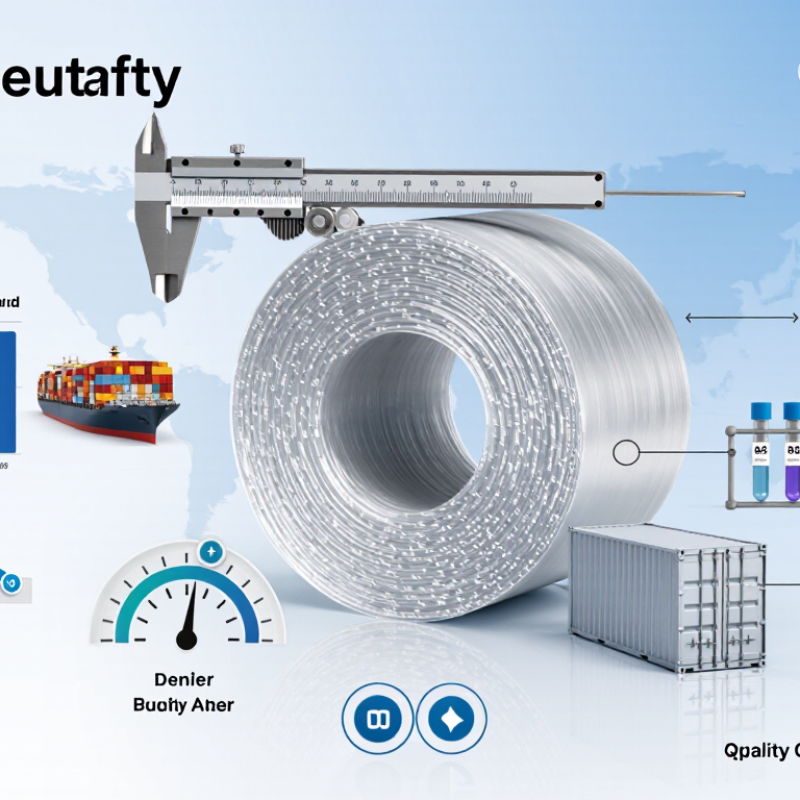
Understanding Hollow Conjugate Materials and Their Applications
7 Hollow Conjugate Buying Tips for Global Buyers
Understanding Hollow Conjugate Materials and Their Applications
Hollow conjugate materials are engineered fibers with internal voids and two or more polymer components. Their hollow core reduces weight and can improve thermal insulation. Conjugate geometry creates controlled crimp during processing. This supports loft, resilience, and a softer hand feel. Performance depends on polymer selection, cross-sectional design, denier, and surface finish. Small changes matter.
These fibers appear in quilts, pillows, thermal clothing, hygiene products, and selected nonwoven applications. Global buyers should check polymer compatibility. Confirm denier and hollow ratio. Ask for crimp data and recovery results. Review moisture behavior and processing temperature. Verify color consistency between production lots. Request samples before placing a large order. Define packaging, labeling, and delivery requirements clearly. These details prevent expensive misunderstandings.
A high loft figure can still disappoint after washing or compression. No single specification tells the whole story. Buyers should request technical data, production samples, and independent test reports when practical. Useful checks include tensile performance, resilience, thermal resistance, moisture regain, and dimensional stability. Also review traceability records and material declarations for the destination market. Recycled content claims need evidence, not attractive wording. In my view, the safest evaluation combines laboratory results with an actual end-use trial. A pillow filling and a filtration web may require very different fiber designs. The catalog may look convincing. The finished product is the real test.
Defining Product Specifications for International Purchasing
7 Hollow Conjugate Buying Tips for Global Buyers
Defining Product Specifications for International Purchasing
Hollow conjugate fiber requires more than a basic material name. Buyers should define polymer type, denier, cut length, hollow ratio, crimp, color, and finish. Textile Exchange’s 2024 Materials Market Report estimates global fiber production reached about 124 million tonnes in 2023. This scale makes precise specifications essential. A vague request can produce inconsistent lots, higher testing costs, and difficult customs classification.
Tip: Create a one-page specification sheet before requesting quotations. Include acceptable ranges, not only target values. For example, specify 7–15 denier, 51–64 millimeters, and a documented hollow percentage. Also state end use, filling weight, recovery requirement, and moisture limits. ASTM and ISO test methods should be named for each measurement. Without a test method, “high resilience” means almost nothing.
Tip: Request a pre-production sample and a sealed retention sample. Check fiber cross-section, opening behavior, color uniformity, and odor under realistic handling. The Global Fiber Congress reports that recycled and synthetic fiber quality can vary significantly by feedstock and processing conditions. That warning deserves attention, even when a supplier provides attractive laboratory results. One overlooked detail is packaging compression; it can change loft before inspection.
Tip: Align documents with the purchase contract, packing list, and inspection plan. Record tolerance rules, sampling levels, carton labeling, and dispute procedures. I have found that buyers often over-specify appearance but under-specify performance. That imbalance is worth reconsidering. A practical specification is measurable, testable, and linked to the final application.
7 Hollow Conjugate Buying Tips for Global Buyers
Use these specification checkpoints when comparing hollow conjugate fiber offers across international markets. The values shown are common reference targets and should be confirmed against the supplier’s technical data sheet and test report.
Evaluating Suppliers, Certifications, and Manufacturing Capabilities
7 Hollow Conjugate Buying Tips for Global Buyers
Supplier evaluation should begin with traceable evidence, not attractive samples.
Textile Exchange’s Materials Market Report 2024 estimated global fiber production at 124 million tonnes in 2023. Polyester represented about 57% of output. This scale makes consistency difficult. Ask for business licenses, factory addresses, production capacity, and three recent batch records.
Tip one: verify the actual manufacturer.
Tip two: request ISO 9001 quality procedures.
Tip three: check whether recycled claims match valid chain-of-custody certification.
Paperwork can look perfect.
Manufacturing capability matters more than catalog language.
Confirm denier, cut length, crimp frequency, hollow ratio, silicon treatment, and moisture limits. Request testing methods, tolerances, and retention samples from different lots. A competent supplier should explain carding behavior, filling recovery, and blending performance in your target equipment. Run a small trial before signing a large contract. It may expose problems.
Tip four: inspect opening and blending lines.
Tip five: review laboratory calibration records.
Tip six: audit storage conditions, because compressed fiber can lose recovery after long, humid storage.
ASTM and ISO test methods can improve comparison, but laboratories may still report different results.
For certification review, check scope, expiry dates, certificate numbers, and covered facilities.
A recycled-content certificate does not automatically prove product performance.
Tip seven: link every claim to a specification and test report.
Textile Exchange also stresses stronger material traceability across textile supply chains, yet traceability remains uneven in practice. Do not accept “export quality” as a measurable standard. I would also document rejected samples and corrective actions. That extra record feels tedious, but it protects purchasing decisions when performance changes later.
Verifying Quality Through Samples, Testing, and Inspection
7 Hollow Conjugate Buying Tips for Global Buyers
Verifying Quality Through Samples, Testing, and Inspection
A polished sample proves very little. Request samples from multiple production lots, not only a hand-picked carton. Record denier, cut length, hollow ratio, conjugate structure, crimp, moisture, and finish content. Keep sealed reference samples for later comparison. This simple step prevents arguments after shipment.
Use independent testing when the order matters. ISO 1973 supports linear-density testing for fibers, while ISO 5079 covers tensile properties. Cross-sectional microscopy can reveal collapsed hollows, uneven bonding, or poor eccentricity. Thermal analysis may also identify unexpected polymer behavior. According to Textile Exchange’s Materials Market Report 2024, global fiber production reached 124 million tonnes in 2023. At this scale, small specification errors can spread across thousands of finished products.
Inspect the actual lot before loading. Check bale labels, carton counts, gross weight, contamination, color variation, and moisture readings. Apply a written sampling plan, such as ISO 2859-1, but do not treat an acceptable quality limit as “zero defects.” It only controls inspection risk. Ask for raw test data, not a decorative certificate. A supplier’s report can be useful, yet it is not independent evidence. One uncomfortable weakness remains: laboratory results may not predict carding, blending, or filling performance perfectly. Run a small production trial before approving the full shipment. That extra test costs time. It can prevent an expensive surprise.