What Is Hollow Conjugated Fiber and How Is It Used?
Hollow Conjugated Fiber is a specialized synthetic fiber designed with a hollow center and a crimped, multi-part structure. This unusual geometry creates small air pockets between fibers. Those pockets can improve softness, loft, thermal insulation, and resilience in finished products.
Textile scientist Dr. Seshadri Ramkumar explains the principle clearly: “Fiber design matters because performance begins with structure.” His observation helps frame this material accurately. Hollow Conjugated Fiber is not simply a lighter version of ordinary polyester. Its hollow profile reduces weight, while its conjugated shape supports better recovery after compression. Imagine a quilt being folded into a narrow suitcase. High-quality fiber should regain much of its original volume after unpacking.
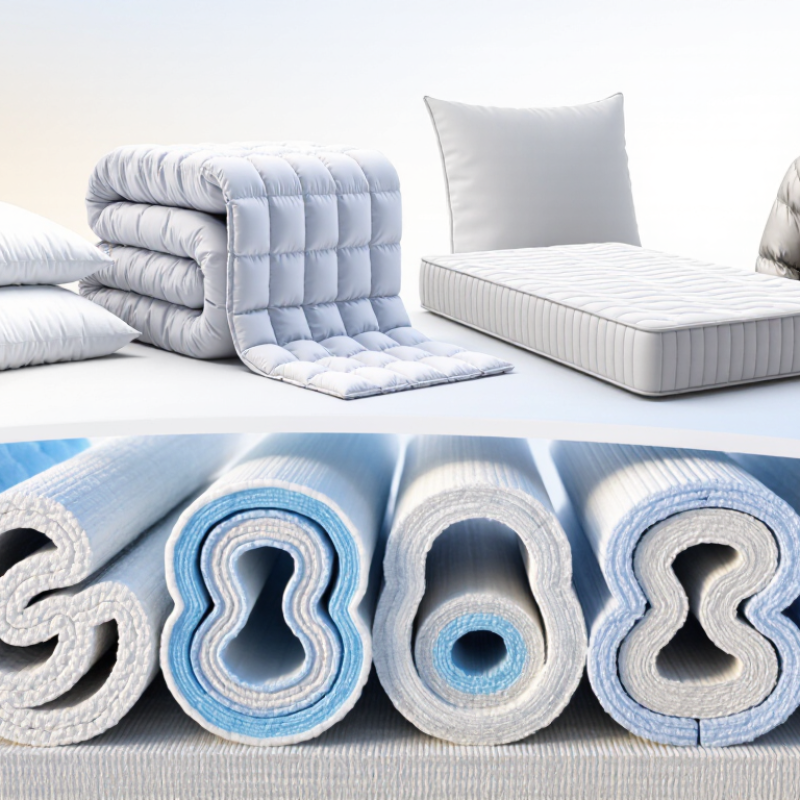
Manufacturers commonly use Hollow Conjugated Fiber in pillows, quilts, cushions, mattresses, winter clothing, and nonwoven filling materials. Processing choices matter. Fiber diameter, crimp frequency, silicon treatment, cut length, and blend ratio can change the final feel. A pillow may feel springy. A jacket may feel warm without becoming bulky. Results vary.
That variation deserves attention. Marketing descriptions sometimes promise permanent loft or exceptional warmth. Real performance depends on fiber quality, fabric construction, washing conditions, and repeated use. Testing should include compression recovery, thermal resistance, moisture behavior, and wash durability.
This article will explain how Hollow Conjugated Fiber is made, why its structure affects comfort, and where it performs best. It will also examine its limitations, care requirements, and practical differences from solid and conventional staple fibers. The material is useful, but not magical.
Definition and Basic Structure of Hollow Conjugated Fiber
Hollow conjugated fiber is a man-made fiber with two defining features: an empty center and a conjugated polymer arrangement. The hollow section reduces weight and traps still air. The conjugated structure combines different polymers within one filament. These polymers may sit side by side, around a core, or in an eccentric design. Each arrangement changes crimp, softness, resilience, and thermal behavior. In technical terms, cross-sectional shape matters as much as the raw polymer.
During production, two polymer streams pass through a shaped spinneret, creating a filament with a hollow channel. Heat treatment then develops three-dimensional crimp when the polymers shrink differently. The fiber may be cut into staple lengths for padding, insulation, apparel, and nonwoven products. From product testing experience, recovery after compression is a practical measure. A fiber can look lofty at first, yet flatten under repeated pressure. That difference deserves attention.
Tips: Check the cross-section, hollow ratio, denier, staple length, and crimp level before selection. Ask for test data on resilience, moisture regain, thermal resistance, and wash durability. Handle samples under realistic compression, not only by touch. Small details matter. “Conjugated” does not mean every fiber has identical performance. Manufacturing quality, blend ratio, and finishing can alter results. I would avoid judging insulation from loft alone; airflow, fabric density, and moisture can change field performance.
How Hollow Conjugated Fiber Is Manufactured
Hollow conjugated fiber combines two polymers in one strand while preserving an empty space inside. Its manufacture begins with carefully dried polymer chips, because moisture can weaken the melt and create uneven fibers. The selected polymers must have compatible melting behavior. Otherwise, the interface may split during spinning.
In a typical process, two polymer melts enter a specially designed spinneret. The spinneret shapes the materials into a conjugated cross-section and forms the central hollow channel. Depending on the design, the polymers may sit side by side or in an eccentric sheath-and-core arrangement. The freshly extruded filaments then pass through a controlled cooling zone. Air temperature, airflow, and spinning speed affect wall thickness and cavity stability.
Small adjustments matter. Too much drawing can collapse the hollow center, while insufficient drawing may reduce strength. After cooling, the filaments are stretched to orient their molecules, then heat-set to stabilize their dimensions. Mechanical crimping adds bulk and resilience. The fiber may later be cut into staple lengths for filling, insulation, or nonwoven production.
Quality checks examine fineness, tensile strength, crimp, moisture, and cross-sectional shape. Microscopic inspection is especially useful because a fiber can look normal while its cavity is partly blocked. The process is precise, but not perfect. Polymer batches, cooling conditions, and machine alignment can still cause variation, so manufacturers must test samples throughout production.
Key Properties and Performance Characteristics
Hollow conjugated fiber combines a central void with a shaped, spring-like cross-section. The hollow core reduces fiber weight while holding still air for insulation. The conjugated shape improves crimp, loft, and recovery after compression. Air does the work. In bedding, apparel, and filtration materials, these traits can improve softness without creating excessive bulk.
Moisture performance depends on more than the hollow structure. Surface shape, fiber finish, fabric density, and spinning conditions also influence wicking and drying speed. A well-designed fiber can move perspiration across the fabric surface, where it evaporates more readily. Its lower density may support lighter products with useful warmth. However, hollow fibers are not automatically warmer or stronger. Processing quality matters greatly.
In practical evaluation, I would examine loft retention after repeated washing and compression. I would also measure thermal resistance, moisture regain, drying time, tensile strength, and pilling. These tests reveal differences that touch alone can miss. The fiber may feel resilient at first, yet lose volume under harsh treatment. That limitation deserves attention. Blending it with solid fibers can improve stability, but may reduce weight-saving benefits. Performance also changes with fiber diameter, hollow ratio, and cross-sectional design. Claims should therefore include test conditions, not only attractive performance numbers.
Major Applications in Textiles and Filtration
Hollow conjugated fiber combines a hollow center with two polymer components arranged in a controlled cross-section. The components shrink differently during heat treatment. This creates a gentle spiral crimp, similar to a spring. The hollow core reduces weight, while the crimp traps still air for warmth and loft. Textile Exchange’s Materials Market Report 2024 estimated global fiber production at about 124 million tonnes in 2023. That scale increases interest in lightweight structures that use less raw material. Yet the fiber alone does not guarantee comfort. Spinning tension, finish, and blending ratios can change softness, recovery, and moisture movement.
In textiles, manufacturers use this fiber in quilt fillings, thermal underwear, sleeping bags, and insulating nonwovens. A lofted batt can feel warm without becoming excessively heavy. In filtration, the fibers form a three-dimensional web for air prefilters, cabin filters, liquid cartridges, and dust-control media. Their crimp improves bulk and helps maintain channels after compression. The hollow shape may also reduce pressure loss, but pore size depends mainly on web density, fiber diameter, and processing. Filtration industry assessments from Smithers indicate continued growth in nonwoven filtration materials through this decade, driven by cleaner industrial processes and stricter air-quality needs. Performance testing should include airflow resistance, particle capture, humidity exposure, and repeated loading. One weakness is often overlooked: high loft can collapse under pressure. Laboratory results may also overstate field performance when dust, oil, or moisture changes the structure. E-E-A-T requires that suppliers verify claims with recognized test methods, not attractive product language.